How to Clean Hidden Dryer Vent Ducts to Stop House Fires

Cleaning hidden dryer ducts removes flammable lint and lets trapped heat escape, helping clothes dry in one normal cycle. Maryland homeowners booking a local bathroom vent cleaning service or whole-house exhaust work often miss the dryer ducts inside their walls. Those concealed spaces can hold dense lint buildup that needs to come out.
Proper cleaning restores airflow, but the pipe itself matters too. Avoid the dangerous planning mistake of using thin, ribbed vinyl hoses inside walls, where they can warp or crush and trap flammable fibers.
Across Maryland, hidden dryer lines often pass through cold crawlspaces or finished basements before reaching an outside wall or roof cap. Some run through enclosed spaces between several floors. Trapped moisture makes lint stick to the pipe walls, creating a fire hazard and forcing you to run the dryer again.
Checking the route, disconnecting the appliance safely, and cleaning the full pipe helps protect your home while reducing wear on the dryer.
What's Inside This Guide
The Dangers Lurking in Concealed Laundry Wall Chases
Blockages behind drywall or beneath floors are easy to miss. Dryer lint contains flammable cotton and synthetic fibers that can ignite when poor airflow causes heating elements to overheat. The U.S. Fire Administration’s home safety guidance identifies restricted exhaust vents as an avoidable cause of appliance fires.

Lint buildup inside a dryer duct concealed by wall framing.
Carbon Monoxide Infiltration and Ambient Dust Spread
Gas dryers produce exhaust gases, including carbon monoxide, that must go directly outdoors. Dense lint can block that path and force odorless, toxic fumes back into living spaces, a problem called backdrafting. Pressure inside the blocked system also pushes fine lint through appliance seams, spreading dust and allergens through your home.
Moisture Traps, Odors, and Severe Motor Strain
Wet laundry holds moisture that needs a clear path out of the building. A blocked vent lets warm moisture condense along duct seams inside exterior walls, causing musty smells. Heat trapped in the dryer also strains its thermal fuses, bearings and drive belts, leading to more breakdowns.
Safety check: Dryer ducts passing through an unheated basement or attic must use smooth, rigid metal pipe, not ribbed foil that collects lint.
Five-Step Blueprint for Mapping and Clearing Buried Exhaust Lines
Pushing a hand brush into the wall opening won't necessarily clear a hidden exhaust line. Plan the work before starting so you can remove the whole lint plug without pulling apart joints inside a closed ceiling.
Video: A step-by-step dryer vent cleaning demonstration from AmplifyDIY.

The five steps from disconnecting the dryer to checking airflow.
Disconnect power and supply lines: Unplug the dryer and close the gas shutoff valve before moving the machine to protect the home's utility connections.
Map the full duct route: Find the exhaust hood on the outside wall or roof. Estimate the total pipe length and count every 90-degree elbow.
Check the connecting duct: Remove the collar behind the dryer and look for crushed pipe. Check for heavy lint buildup behind the machine too.
Use rotating brushes: Feed flexible nylon rods with rotating brush heads inward from the outdoor hood to loosen packed lint inside the pipe.
Check exhaust airflow: Reconnect the system and run the dryer on air-fluff mode. Use an anemometer, which measures air speed, or feel airflow at the outside flap.
Settling Access Logistics and Duct Route Challenges
Find the outside vent before planning access: it may sit at ground level, high on a gable, or on a second-story roof. Roof vents often need extension ladders and fall protection, plus tools for clearing packed lint screens from above. For unusually long lines, our notes on clothes that take two cycles to dry explain hidden restrictions.
Selecting the Right Duct Material and Extraction Strategy
Your home's foundation and framing limit where the dryer duct can go, as does the laundry room's location. Pipe material and cleaning tools matter just as much as the route. The wrong choice can leave you with another clog within weeks.
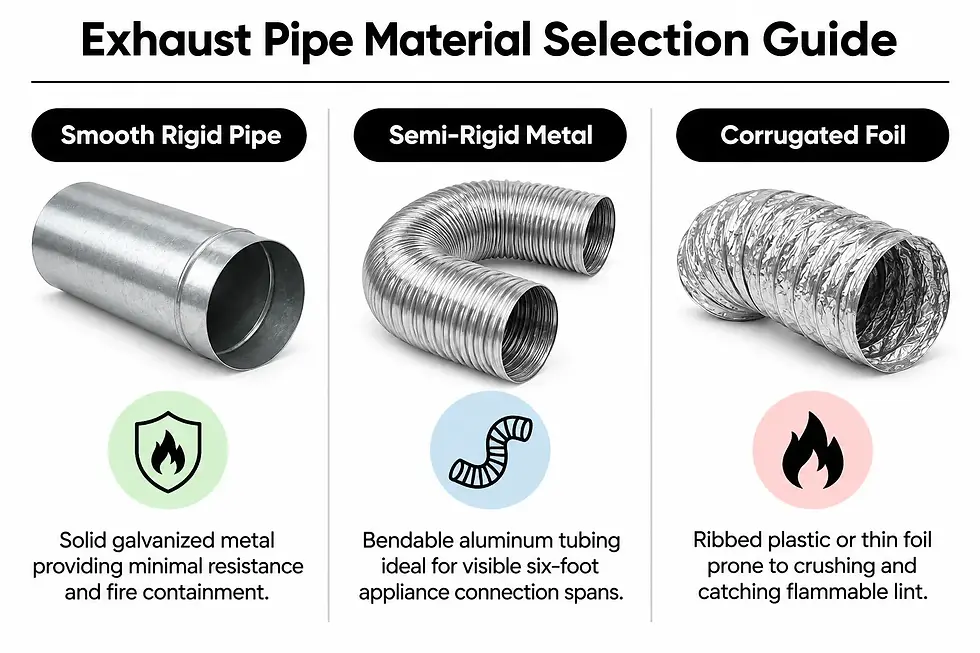
Compare pipe materials before replacing a dryer duct.
Rigid Metal Ducting Versus Semi-Rigid Transition Runs
Standard building codes call for smooth, rigid galvanized steel or aluminum inside concealed walls. Semi-rigid aluminum can connect the dryer to the wall inlet, but that section must stay visible. Replace thin corrugated foil or vinyl hose right away because its inside ridges catch lint.
DIY Manual Kits Versus Professional High-Velocity Vacuums
Store-bought drill brush kits work well on short, straight runs under six feet. Longer pipes through floor joists need commercial rotating brushes and strong suction to collect loosened lint without blowing it into wall cavities. Homeowners planning duct upgrades often book bathroom vent cleaning at the same time to clear the home's exhaust lines in one visit.
Exhaust line option | Best suited for | Main risk to watch |
Smooth rigid galvanized pipe | Hidden wall runs, basements and attic spans | Needs taped joints without sheet metal screws |
Semi-rigid flexible metal | Visible dryer connections up to 6 feet | Can kink if pushed too close to the wall |
Corrugated foil / vinyl hose | Not recommended for any installation | Traps flammable lint and collapses easily |
Critical Technical Checks That Ensure Long-Term Fire Prevention
Small fitting mistakes can turn a clean exhaust line into a recurring fire hazard. We check how the pipes are joined and fastened, then make sure the outside flap works properly.
Fasteners, Seam Sealing, and Hood Flappers
Remove sheet metal screws: Screw tips sticking into the pipe catch passing lint, which builds up into larger clogs.
Use foil HVAC tape: Seal overlapping pipe joints with aluminum foil tape made for heating and ventilation systems. Ordinary duct tape dries out and fails.
Check the outside flap: Make sure exhaust air opens it fully and that it closes tightly to keep out cold air and pests.
Thorough cleaning removes fire hazards and helps the dryer work efficiently by restoring airflow. Before booking dryer vent cleaning, ask if the technician uses suction equipment to collect loosened lint. Our guide to clearing smoky commercial kitchen ducts also explains why airflow matters for fire prevention.
Code compliance rule: Keep dryer vent runs within 35 feet, reducing that allowance by 5 feet for each standard 90-degree elbow to account for airflow resistance.
Project Phases, Execution Timelines, and Key Cost Drivers
Knowing what the work involves makes it easier to plan maintenance and understand the price. Basic cleaning is straightforward, but ducts that cross several floors need specialized tools and more labor.
Phase | What happens | Handled by | Typical timing |
Initial inspection | Measure airflow, check the outside vent and trace the pipe | Homeowner or professional | 15 - 20 minutes |
Line preparation | Disconnect the dryer, clear the lint trap and seal the equipment connection | Technician | 15 - 25 minutes |
Rotating brush cleaning | Brush the hidden pipe while a high-efficiency HEPA-filtered vacuum collects lint | Specialist | 30 - 45 minutes |
Outside vent cleaning | Clear the outside flap and clean the exhaust hood | Technician | 15 - 20 minutes |
Airflow check | Check joints, reconnect power and test exhaust airflow | Specialist | 10 - 15 minutes |
Cleaning cost depends on the pipe's length and how easily we can reach it, including the outside vent. A ground-level outlet directly behind the laundry room is a standard service ($). Second-story lines through crawlspaces, or outlets on steep roofs, need specialized safety gear and cost more ($$-$$$).
For moisture problems elsewhere in your exhaust system, read our advice on bathroom fan mistakes that cause mold. Homeowners interested in commercial standards can also read about NFPA 96 requirements for restaurant kitchen hoods, which explain how professionals handle heavy grease and airborne particle risks.
Common Questions on Clearing Concealed Residential Dryer Vents
How can I tell if my hidden dryer duct is blocked?
Clothes needing more than one normal cycle to dry are the most common warning. Other signs include an unusually hot dryer cabinet or a humid laundry room. Freshly washed clothes may also carry a musty smell.
How often should hidden dryer exhaust ducts be cleared?
Most single-family homes need the full vent brushed and cleaned every twelve months. Large families doing daily laundry may benefit from cleaning every nine months. Pet hair and long pipe runs with several bends can also call for that shorter schedule.
Can I clear a multi-story hidden vent using a standard drill kit?
Drill kits often come apart or snap at elbows when forced through long ducts, leaving brush heads stuck behind drywall. Professional tools use air-powered whips that spin in reverse, along with strong vacuum suction, to clear those longer lines safely.
Does a blocked exhaust vent create a carbon monoxide risk?
Yes, a blocked gas dryer exhaust line forces carbon monoxide and other exhaust gases back into the home. Keep the full exhaust path clean and open to protect the air you breathe indoors.
What should I look for when selecting a vent cleaning specialist?
Choose a ventilation contractor with rotating cleaning tools and suction machines fitted with high-efficiency HEPA filters to capture fine particles. Ask for proof of insurance and confirm that the technician checks airflow after cleaning, rather than stopping once the lint is removed.
Book Professional Vent Clearance with Bravo Dust Cleaning
At Bravo Dust Cleaning, our team has maintained ventilation systems across Maryland for over twenty years, including around Frederick, Rockville and Silver Spring. We bring specialized rotating brushes and commercial vacuums to remove packed lint safely. That work restores airflow and helps protect your dryer from the strain of a blocked exhaust.
Our fully insured team handles inspections and airflow tests as well as full line cleaning, backed by a 100% satisfaction guarantee. To arrange a visit, use our contact page to schedule your service.


Comments